

What is Smart Manufacturing?
Smart Manufacturing is the advanced technology-driven approach that integrates intensive applications of ICT and internet-connected machines in the production process. It is a key element of the Fourth Industrial Revolution — Industry 4.0.
By employing state-of-the-art technologies along with integrated data-driven systems, smart manufacturing optimises the entire manufacturing process to improve the efficiency and flexibility of existing manufacturing environments.
This programme provides a comprehensive framework for implementing smart manufacturing at both enterprise and national levels, drawing from the expertise of APO member countries including Malaysia, India, the Philippines, Vietnam, and more.
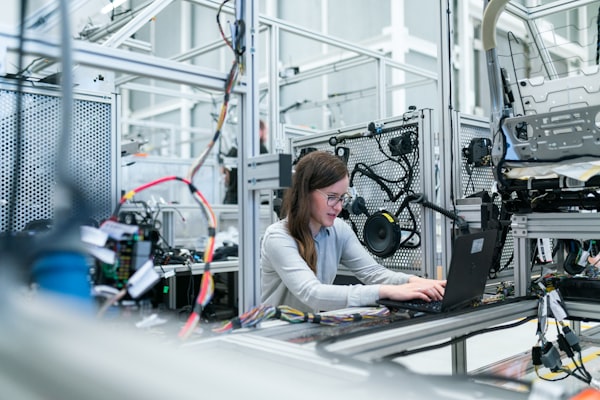
Smart Manufacturing Technologies
Key enabling technologies that drive the transformation towards intelligent and connected manufacturing
Autonomous Robots
Robotic arms, cobots, and automated guided vehicles for production line automation
IoT & IIoT
Internet of Things connecting machines, sensors, and systems across the factory floor
Big Data Analytics
Data-driven insights for predictive maintenance, OEE, and process optimisation
Cloud Computing
Centralised server infrastructure hosting ERP, MES, and manufacturing intelligence
Artificial Intelligence
Machine learning for quality control, demand forecasting, and smart decision-making
Cyber Security
Protecting enterprise data, IP, and connected systems from cyber threats
Additive Manufacturing
3D printing and rapid prototyping for flexible and customised production
Augmented Reality
AR-assisted maintenance, training, and quality inspection on the shop floor
System Integration
Horizontal and vertical integration connecting machines to MES and ERP systems
Implementation Framework
A structured roadmap for enterprises and nations to transition from traditional manufacturing to smart manufacturing — from awareness to full implementation.
Awareness
Spark awareness among decision makers on the importance and benefits of smart manufacturing through technology centres and lighthouses.
Readiness Assessment
Comprehensive assessment to evaluate enterprise readiness, identify capability gaps, and determine the starting point for transformation.
Strategy & Blueprint
Develop a clear roadmap and blueprint with experienced consultants to plan the implementation of smart manufacturing solutions.
Implementation
Technical teams carry out solutions — installing IoT sensors, connecting machines to MES/ERP, and deploying automation technologies.
Financing
Secure financing through government grants, matching funds, and programme schemes to support smart manufacturing integration.
Talent & Training
Upskill workforce through training programmes to navigate and operate in a smart manufacturing environment effectively.
Priority Industries
High-potential sectors leading the adoption of smart manufacturing technologies
Electrical & Electronics
Semiconductors, electronic components, consumer and industrial electronics
Machinery & Equipment
Specialised machinery, power-generating equipment, machine tools, and parts
Chemicals
Catalyst industry for development with abundant oil & gas as primary commodity
Medical Devices
Rubber, latex, plastics, machinery, engineering, and electronics support products
Aerospace
Engineering & design, aero-manufacturing, system integration, and MRO
Automotive & Transport
Vehicle manufacturing, transport equipment, and related supply chain systems
Key Challenges in SME Adoption
Understanding the barriers that prevent SMEs from embracing smart manufacturing is critical to designing effective support programmes and policies.
Source: MITI Survey (Public Consultation), 2018

Smart Manufacturing Integration
Horizontal and vertical integration — connecting machines, systems, and intelligence across the entire production chain
Horizontal Integration
Connecting individual machines on the production line using smart manufacturing technologies.
Vertical Integration
Connecting each machine to a centralised server hosting ERP and MES for full factory intelligence.
Training Delivery
Multi-format learning designed for maximum knowledge transfer and practical application
Expert-Led Sessions
Interactive lectures with industry practitioners and I4.0 experts
Hands-on Workshop
Practical exercises with IoT devices, data analytics, and automation tools
Case Studies
Real-world smart manufacturing implementations from APO member countries
Readiness Assessment
Guided assessment to evaluate your enterprise's readiness for smart manufacturing
Who Should Attend?
This programme is designed for professionals, enterprises, and policy makers seeking to accelerate smart manufacturing adoption and drive Industry 4.0 transformation.